so it’s saying that nuclear usage share is so low that solar will very soon generate more power than it, not that solar panels are now more efficient than nuclear
We’ve known the ROI on Solar/Wind has been better than Nuclear for decades.
Nuclear usage is flat because it isn’t profitable to build or operate. The efficiency of Renewables is economic efficiency. Cheap scaling, low overhead, high profit margin
The main advantage nuclear has is size. It can produce more power per hectare of land than either solar or wind can, and this will be even more the case if the small scale reactors that Canada has been researching ever become a thing - basically a power plant in a shipping container, meant to service remote communities.
People have been trying to do small scale fission for decades. They always slam headfirst into the square cubed law and the fact that fission plants were built giant for a damn good reason. Fission is so cost inefficient that the only remote hope you can have of making it profitable is if you build giant reactors and hope for big economies of scale. The hope of building small reactors on assembly lines has proven to be a pipe dream. Many have tried it, and it has failed again and again.
@Omgpwnies@technology Power density and the ability to generate large amounts of power quickly. There is less need for new methods of power storage (e.g., batteries).
Which is definitely helpful for utility that’s constrained by space. For instance, with the nuclear powered freight shipping that Jiangnan Shipyard is looking to pioneer.
But for urban grid power or industrial production at the continental scale, space isn’t an issue. One reason why states like Texas and California are running away with renewable power even in the face of hostile political headwinds. Real estate is far cheaper than the energy is produces.
For the places that have enough land and environmental conditions suitable for wind/solar, that is true. In remote communities, just getting the materials for a wind farm there is incredibly difficult if there’s no warm water port for a ship to deliver the blades for instance. A nuclear reactor in a shipping container can be driven by transport on the logging roads or even air-lifted in. It’s not a universal solution, it’s something specific to fit a community’s unique needs.
For the places that have enough land and environmental conditions suitable for wind/solar, that is true.
Again, who doesn’t have this access?
In remote communities, just getting the materials for a wind farm there is incredibly difficult
Remote communities don’t have the kind of energy demand that nuclear power fulfills. Nevermind how it’s always going to be more expensive to build a nuclear generator than a big fan connected to a dynamo.
It’s not a universal solution
It doesn’t need to be, when the bulk of what we’re trying to replace is coal and natural gas.
I agree with this; I think the “universal” argument and subsequent infighting is propped up by the oil lobby to slow us down. I just think it’s important to highlight how efficient nuclear is. We should be using both good tools to solve this and part of that is knowing how good both are so they’re not unnecessarily ignored.
That argument holds for existing proven tech like large nuclear and solar, but convincing governments to invest in unproven and unlikly tech is a great way to prevent actual transition to occur at all. They sop up cash and give governments reasons to build nothing now, or eventually build expensive tiny demonstration systems that do not effect the overall fossil fuel market. That list would include things like small modular reactors, hydrogen power, fusion, etc.
i am very divided over SMRs, but large traditional reactors have been proven many times over, and in any case investing in unproven tech (by any government but the US) is what led solar to be this good now in the first place
There are communities in northern Ontario that are only accessibly by airplane ~6 months of the year, and those 6 months also have very low amounts of sunlight. They’re not quite north enough to be completely dark all day, but they only get a few hours of useable light per day in the winter.
This means that a) solar is less effective in the winter, and b) if there is damage to a wind turbine blade in the winter, they may not be able to get a replacement until spring.
Remote communities don’t have the kind of energy demand that nuclear power fulfills
Each reactor cell produces about 1MW, which is about enough to power a small town of about 1,000 people. They can also be air-lifted meaning if it needs to be replaced during the winter, that is still possible.
SMRs will be neat if they actually work, but there is no demostration that they can be remotely economically feasible. Even considering carbon emissions, it would be cheaper and more effective to improve the carbon footprint of the main power grid by a tiny fraction of a percent and then just give those small northern communities modern fossil fuel plants, maybe supplemented with renewables over time.
For large northern communities, grid connections are going to be the eventual solution either way.
Only because solar/wind’s been subsidized (by nearly everybody but the US and Russia) to heck. This is like saying trains aren’t profitable because of how much the US subsidizes roads. Even then, nuclear ROI is still better in the long term, it just comes slower.
Nothing has been more subsidized than nuclear energy. It’s entire existence is predicated on public R&D. Virtually all of its generators are public projects. It’s a notorious money loser to operate. We still don’t have a good solution for nuclear waste, so that gets stashed on public lands and in Superfund sites, too.
That’s not the reason it lags the alternatives, though. If public spending got us cheap energy with zero trade offs, everyone would be France by now.
Solar/Wind, by contrast, get dogshit subsidies both relative to nuclear and fossil fuels. It outperforms in defiance of subsidies, often growing market share in states that are actively hostile to its expansion.
Even in the face of enormous cuts to public spending and bailouts to coal, under Trump 1 & 2, renewables increased their market share.
That’s because renewables aren’t just efficient, they’re profitable. Enormously profitable. The private sector loves high margins on their capex spend, and renewables consistently deliver.
Nothing has been more subsidized than nuclear energy. It’s entire existence is predicated on public R&D.
You seem to be implying that solar cells weren’t. I don’t believe that is true. Photovoltaics were brought about by US the government for satellites. (PV was initially discovered privately, but so was nuclear.) Solar was considered a notorious money loser to the point where it was only deployed for spaceflight. It was only after 60 years of public R&D that private commercial solar became variable in the 2010s.
We still don’t have a good solution for nuclear waste, so that gets stashed on public lands
This I’ll concede. In fact, in the US, it’s worse than “public lands”: it’s often indigenous reservations, so land the US doesn’t even own and sacred sites.
I’ll note that despite this being indeed a very big issue, nuclear land use is still two orders of magnitude less than solar for equivalent energy generation.
Virtually all of its generators are public projects. […] Solar/Wind, by contrast, get dogshit subsidies both relative to nuclear and fossil fuels.
Not true at all. In FY 2016 alone, US subsidies were just 415 million to nuclear, compared to 3036 million for solar (https://www.eia.gov/analysis/requests/subsidy/pdf/subsidy.pdf Tables A3, A4). That’s nearly an order of magnitude. Nuclear is operated by companies just as solar is.
Solar only became the knockout winner it is today after 70 years of intense research. Nuclear only got 40. I am simply saying we should give it the fair chance before you can say that there really is no potential.
You seem to be implying that solar cells weren’t. I don’t believe that is true
Tell it to Bell Labs. Tell it to the the Solar Energy Industries Association. Idk why Americans couldn’t get on the ball publicly. But solar was squarely in the private domain for generations.
Photovoltaics were brought about by US the government for satellites.
They were brought about by the industrialization of satellites, certainly. But the R&D was all heavily privatized by and for the private telecommunications sector.
When the US began rolling out large scale solar power plants in earnest, Walmart became the nation’s largest installer and purchaser. No state or federal department came close to it.
The largest investors in new build construction are NRG Energy and Google. Even the state regulated utilities lag behind.
Solar only became the knockout winner it is today after 70 years of intense research.
Largely overseas and financed by foreign governments or private firms. The US efforts at subsidizing solar are regularly stymied and gutted by conservative governments.
It is literally impossible to operate a fission plant without government subsidies. Private insurers won’t touch the things, as the potential damage they can do in a worst case scenario is something only the budgets of nation states can absorb. Nuclear plants always rely on national insurance schemes to make them viable.


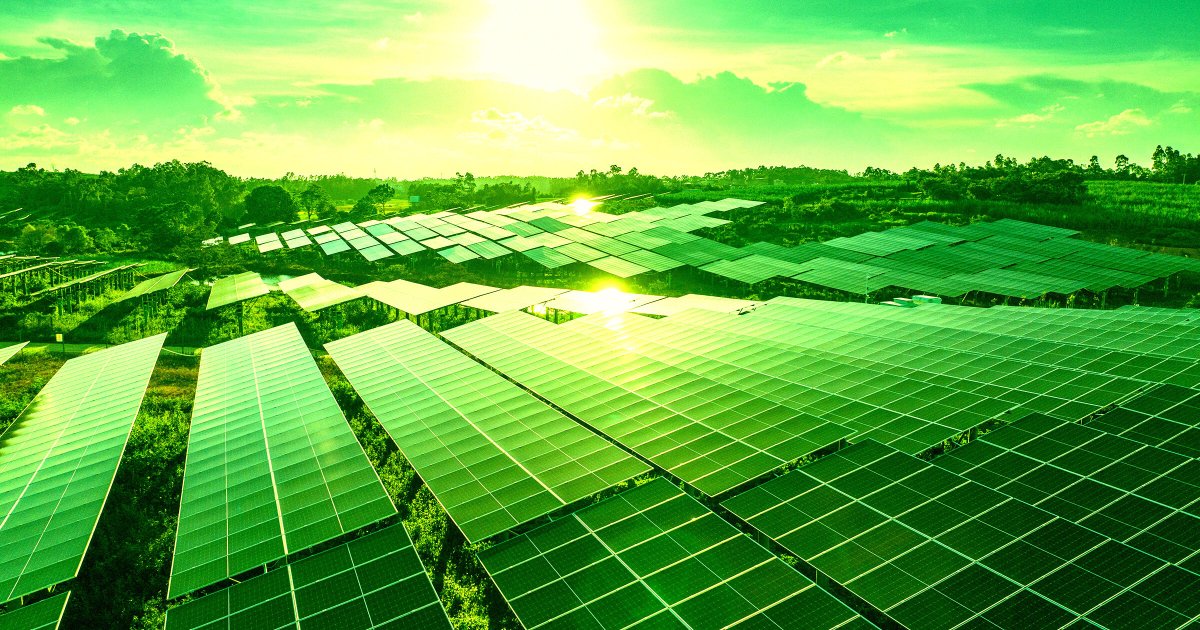
We’ve known the ROI on Solar/Wind has been better than Nuclear for decades.
Nuclear usage is flat because it isn’t profitable to build or operate. The efficiency of Renewables is economic efficiency. Cheap scaling, low overhead, high profit margin
The main advantage nuclear has is size. It can produce more power per hectare of land than either solar or wind can, and this will be even more the case if the small scale reactors that Canada has been researching ever become a thing - basically a power plant in a shipping container, meant to service remote communities.
People have been trying to do small scale fission for decades. They always slam headfirst into the square cubed law and the fact that fission plants were built giant for a damn good reason. Fission is so cost inefficient that the only remote hope you can have of making it profitable is if you build giant reactors and hope for big economies of scale. The hope of building small reactors on assembly lines has proven to be a pipe dream. Many have tried it, and it has failed again and again.
@Omgpwnies @technology Power density and the ability to generate large amounts of power quickly. There is less need for new methods of power storage (e.g., batteries).
Which is definitely helpful for utility that’s constrained by space. For instance, with the nuclear powered freight shipping that Jiangnan Shipyard is looking to pioneer.
But for urban grid power or industrial production at the continental scale, space isn’t an issue. One reason why states like Texas and California are running away with renewable power even in the face of hostile political headwinds. Real estate is far cheaper than the energy is produces.
For the places that have enough land and environmental conditions suitable for wind/solar, that is true. In remote communities, just getting the materials for a wind farm there is incredibly difficult if there’s no warm water port for a ship to deliver the blades for instance. A nuclear reactor in a shipping container can be driven by transport on the logging roads or even air-lifted in. It’s not a universal solution, it’s something specific to fit a community’s unique needs.
Again, who doesn’t have this access?
Remote communities don’t have the kind of energy demand that nuclear power fulfills. Nevermind how it’s always going to be more expensive to build a nuclear generator than a big fan connected to a dynamo.
It doesn’t need to be, when the bulk of what we’re trying to replace is coal and natural gas.
I agree with this; I think the “universal” argument and subsequent infighting is propped up by the oil lobby to slow us down. I just think it’s important to highlight how efficient nuclear is. We should be using both good tools to solve this and part of that is knowing how good both are so they’re not unnecessarily ignored.
That argument holds for existing proven tech like large nuclear and solar, but convincing governments to invest in unproven and unlikly tech is a great way to prevent actual transition to occur at all. They sop up cash and give governments reasons to build nothing now, or eventually build expensive tiny demonstration systems that do not effect the overall fossil fuel market. That list would include things like small modular reactors, hydrogen power, fusion, etc.
i am very divided over SMRs, but large traditional reactors have been proven many times over, and in any case investing in unproven tech (by any government but the US) is what led solar to be this good now in the first place
Yes. But in proving them, we learned that efficiency of scale is required.
There are communities in northern Ontario that are only accessibly by airplane ~6 months of the year, and those 6 months also have very low amounts of sunlight. They’re not quite north enough to be completely dark all day, but they only get a few hours of useable light per day in the winter.
This means that a) solar is less effective in the winter, and b) if there is damage to a wind turbine blade in the winter, they may not be able to get a replacement until spring.
Each reactor cell produces about 1MW, which is about enough to power a small town of about 1,000 people. They can also be air-lifted meaning if it needs to be replaced during the winter, that is still possible.
SMRs will be neat if they actually work, but there is no demostration that they can be remotely economically feasible. Even considering carbon emissions, it would be cheaper and more effective to improve the carbon footprint of the main power grid by a tiny fraction of a percent and then just give those small northern communities modern fossil fuel plants, maybe supplemented with renewables over time.
For large northern communities, grid connections are going to be the eventual solution either way.
And if there’s damage to a nuclear facility?
They hook it up to a helicopter and take it away. It’s literally in a shipping container.
Only because solar/wind’s been subsidized (by nearly everybody but the US and Russia) to heck. This is like saying trains aren’t profitable because of how much the US subsidizes roads. Even then, nuclear ROI is still better in the long term, it just comes slower.
Nuclear power plants are much more subsidized than almost anything on the planet.
How many private sector nuclear power plants are there? How profitable are they? What is the cost per watt?
https://lemmy.dbzer0.com/comment/28903948
There are zero public-sector nuclear plants in the US.
Nothing has been more subsidized than nuclear energy. It’s entire existence is predicated on public R&D. Virtually all of its generators are public projects. It’s a notorious money loser to operate. We still don’t have a good solution for nuclear waste, so that gets stashed on public lands and in Superfund sites, too.
That’s not the reason it lags the alternatives, though. If public spending got us cheap energy with zero trade offs, everyone would be France by now.
Solar/Wind, by contrast, get dogshit subsidies both relative to nuclear and fossil fuels. It outperforms in defiance of subsidies, often growing market share in states that are actively hostile to its expansion.
Even in the face of enormous cuts to public spending and bailouts to coal, under Trump 1 & 2, renewables increased their market share.
That’s because renewables aren’t just efficient, they’re profitable. Enormously profitable. The private sector loves high margins on their capex spend, and renewables consistently deliver.
Even France is replacing nuclear with other sources in the long term.
You seem to be implying that solar cells weren’t. I don’t believe that is true. Photovoltaics were brought about by US the government for satellites. (PV was initially discovered privately, but so was nuclear.) Solar was considered a notorious money loser to the point where it was only deployed for spaceflight. It was only after 60 years of public R&D that private commercial solar became variable in the 2010s.
This I’ll concede. In fact, in the US, it’s worse than “public lands”: it’s often indigenous reservations, so land the US doesn’t even own and sacred sites.
I’ll note that despite this being indeed a very big issue, nuclear land use is still two orders of magnitude less than solar for equivalent energy generation.
Not true at all. In FY 2016 alone, US subsidies were just 415 million to nuclear, compared to 3036 million for solar (https://www.eia.gov/analysis/requests/subsidy/pdf/subsidy.pdf Tables A3, A4). That’s nearly an order of magnitude. Nuclear is operated by companies just as solar is.
Solar only became the knockout winner it is today after 70 years of intense research. Nuclear only got 40. I am simply saying we should give it the fair chance before you can say that there really is no potential.
Tell it to Bell Labs. Tell it to the the Solar Energy Industries Association. Idk why Americans couldn’t get on the ball publicly. But solar was squarely in the private domain for generations.
They were brought about by the industrialization of satellites, certainly. But the R&D was all heavily privatized by and for the private telecommunications sector.
When the US began rolling out large scale solar power plants in earnest, Walmart became the nation’s largest installer and purchaser. No state or federal department came close to it.
The largest investors in new build construction are NRG Energy and Google. Even the state regulated utilities lag behind.
Largely overseas and financed by foreign governments or private firms. The US efforts at subsidizing solar are regularly stymied and gutted by conservative governments.
It is literally impossible to operate a fission plant without government subsidies. Private insurers won’t touch the things, as the potential damage they can do in a worst case scenario is something only the budgets of nation states can absorb. Nuclear plants always rely on national insurance schemes to make them viable.